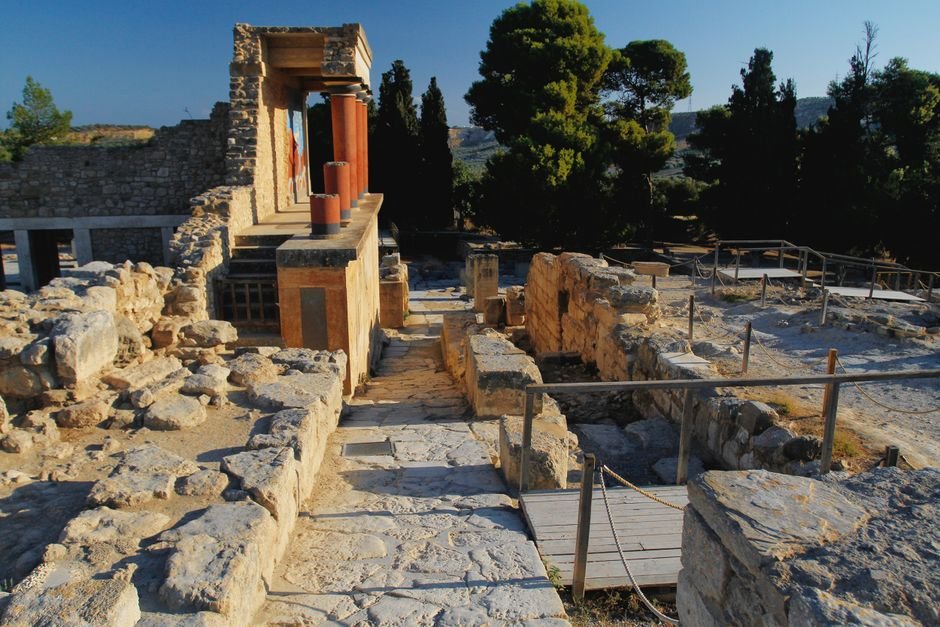
things to do in heraklion range from exploring the Palace of Knossos to tasting Cretan food in the city’s busy market streets. Heraklion is the largest city on Crete, Greece, and a lively base for history, museums, beaches, and day trips.
Many visitors use Heraklion as a quick stop on the way to another part of Crete. Give it at least two full days if you can. The archaeological sites, waterfront, and old town are close enough to combine, but each deserves time.
This guide covers the best sights and local experiences, plus practical advice on getting around, when to visit, and what to book ahead. Whether you have one day or a longer stay, you can shape your plans around the places that interest you most.
Quick Guide to Things to Do in Heraklion
| Plan | Useful details |
|---|---|
| Best for | Ancient history, Cretan food, museums, and city breaks |
| How long to stay | Two to three days for the city and Knossos, longer for day trips |
| Best time to visit | April to June and September to October for milder weather and fewer peak-season crowds |
| Getting around | Walk around the centre; use local buses or a rental car for trips farther afield |
| Good to know | Visit Knossos early, carry water in summer, and check museum and bus schedules before setting out |
20 Fun and Best Things to Do in Heraklion
Tip 1 – Explore the Palace of Knossos
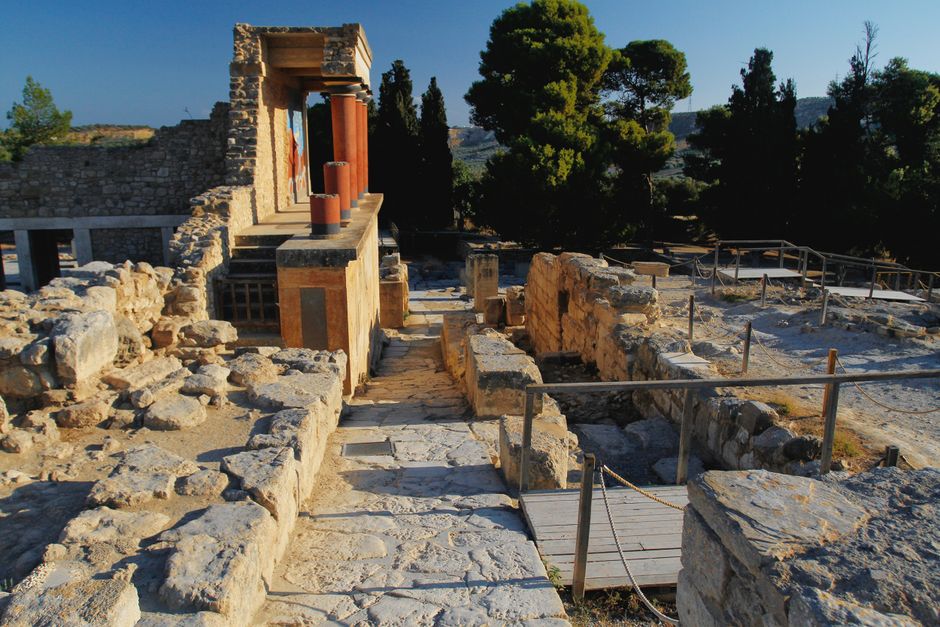
The Palace of Knossos is the most famous archaeological site near Heraklion. It is closely associated with Minoan Crete and the stories of King Minos and the Minotaur. The site is outside the city centre, so plan transport and allow time to walk around the remains.
Go early in the day, especially in summer, when the open paths can get hot and busy. Some reconstructions at the site are debated, so it helps to read the museum displays or join a qualified guide if you want more context. Check current ticket and opening details before your visit.
Tip 2 – See the Heraklion Archaeological Museum
Pair Knossos with the Heraklion Archaeological Museum, which holds important finds from across Crete, including objects from the Minoan period. Seeing the artefacts after visiting the palace can make the site’s history easier to picture.
The museum is in the city centre, making it an easy stop between lunch and a walk through the old town. Check the Heraklion Archaeological Museum website for current visitor information. If you have limited time, choose a few galleries rather than trying to read every display.
Tip 3 – Walk the Venetian harbour and Koules Fortress
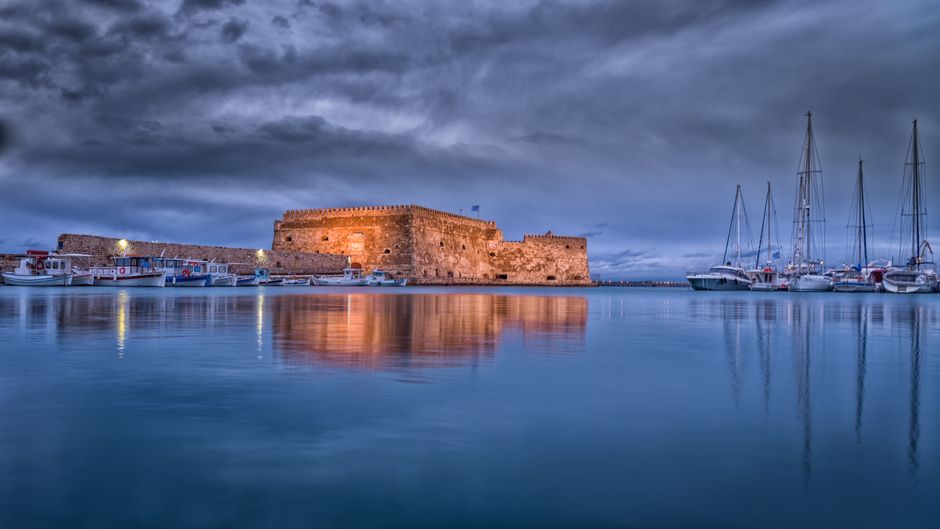
Heraklion’s old harbour is a good place for a relaxed walk, particularly in the cooler hours of morning or evening. Follow the waterfront to Koules Fortress, the stone Venetian fort that stands at the harbour entrance.
Access to the fortress can depend on opening hours and current conditions, so check before making a special trip inside. Even if it is closed, the harbour walk offers views of the sea, fishing boats, and the city walls.
Tip 4 – Visit the Morosini Fountain and Lions Square
Morosini Fountain, often called the Lions Fountain, sits in the centre of a lively pedestrian area. It is an easy landmark to include while exploring the old town, and nearby cafés make it a convenient place to pause.
The square can be busy, especially around meal times. Take a few minutes to look at the fountain and surrounding buildings, then wander down nearby lanes rather than treating the square as a quick photo stop.
Tip 5 – Walk along the Venetian walls
Heraklion’s Venetian walls show how strongly the city was shaped by its history as a fortified port. You can follow sections of the ramparts for a different view over the rooftops and streets.
Allow extra time if you plan to walk a longer stretch. The route is not always a simple, uninterrupted loop at street level, so use a map and wear comfortable shoes. Take water on warm days, as some parts have little shade.
Tip 6 – Browse the Central Market and local shops
Heraklion’s central shopping streets and market area are good for picking up local products such as olive oil, herbs, honey, and Cretan cheeses. Browse at an easy pace and compare prices before buying food or souvenirs.
Opening times can vary by shop and day, and some smaller businesses close for a break. If you want to see the liveliest activity, go earlier in the day. Ask before taking close-up photos of shopkeepers or their displays.
Tip 7 – Try Cretan food in a neighbourhood taverna

Make time for a meal beyond the busiest streets. Look for Cretan dishes such as dakos, a barley rusk topped with tomato and cheese, or slow-cooked lamb and seasonal vegetables. Menus change, so ask what is fresh that day.
A taverna meal is often a leisurely part of the evening rather than a quick stop. Share a few dishes if you are travelling with others, and check whether the price includes bread or bottled water. Tipping is appreciated for good service but is not usually a fixed requirement.
Tip 8 – Taste Cretan olive oil, wine, and raki
Crete is known for its olive oil, local wines, and raki, a spirit often served after a meal. You can try these in restaurants or look for a tasting experience in and around the city.
Ask what is included and whether transport is provided for any tasting outside the centre. If you are driving, do not drink alcohol. For a simple souvenir, buy a sealed bottle from a reputable shop and check customs rules for your destination before packing it.
Tip 9 – Visit the Historical Museum of Crete
The Historical Museum of Crete gives a broader picture of the island’s past, including periods beyond the ancient Minoan world. It is a useful choice if you want to understand how Crete’s history continued through Byzantine, Venetian, and more recent eras.
It is best suited to visitors who enjoy museum displays and want more context than a short city walk can provide. Check the museum’s current hours before going, as schedules may change by season.
Tip 10 – Take a break at a city park or garden

After a morning of sightseeing, take a slower break in one of Heraklion’s small green spaces. The city is busy and built-up, so a shady bench can be welcome, particularly during the hottest part of the day.
Bring water and keep an eye on your belongings as you would in any busy city. Parks are a practical stop for families who need time away from museums and for anyone looking to rest between walks.
Tip 11 – See the Basilica of Saint Mark and the Loggia
The Basilica of Saint Mark and the Venetian Loggia are historic buildings close to the centre’s main squares. Their locations make them easy to include in a self-guided walk through the old town.
These are worthwhile stops for architecture and history, but opening hours and access can vary. Be respectful if a building is being used for a service or civic event, and avoid interrupting people who are there for local purposes.
Tip 12 – Take a day trip to the coast
Heraklion is a city destination, but a beach break is possible with some planning. Ammoudara is a popular coastal option west of the centre, while other beaches and seaside villages may require a bus, taxi, or rental car.
Check the return transport before you go, especially outside the busiest summer months. If you want to explore more than one beach, a rental car offers flexibility, but parking and narrow roads can take patience.
Tip 13 – Plan a family-friendly visit to Cretaquarium

Cretaquarium is outside central Heraklion and can be a good choice for families or visitors interested in Mediterranean marine life. Allow time for the journey and check opening times before setting out.
It is not a substitute for a beach day, but it offers an indoor activity when the weather is very hot or unsettled. Check transport options in advance, as public transport schedules can be less convenient than getting around the city centre.
Tip 14 – Take a Cretan cooking class
A cooking class is a hands-on way to learn about local ingredients and dishes. Look for a class in Heraklion or a nearby village, and check whether it includes a market visit, a full meal, and transport.
Book ahead in high season, particularly if you have dietary needs or want a small group. Tell the host about allergies before confirming, and ask whether the class is suitable for children if you are travelling as a family.
Tip 15 – Explore the city on foot
Many central attractions are close enough to visit on foot, including Lions Square, the market area, the museum, and the harbour. Walking is often the easiest way to notice small churches, cafés, and side streets you might otherwise miss.
Footpaths can be uneven, and traffic may feel busy around larger roads. Use marked crossings, keep comfortable shoes in your day bag, and avoid walking long distances in the midday heat during summer.
Tip 16 – Use local buses for trips beyond the centre
Local buses can help you reach areas outside the old town, including Knossos and nearby suburbs. Routes and schedules can change, so check the latest information before you travel. The Heraklion-area KTEL bus website is a useful place to look for regional bus details.
Allow extra time for busy stops and keep small change or a payment option available if needed. Confirm the direction and final stop with the driver or at the station, especially if you are travelling to a less familiar destination.
Tip 17 – Choose the right season for your trip
Spring and early autumn are often comfortable times to explore Heraklion, with warm days that can be easier for walking than peak summer. July and August bring high temperatures, more visitors, and busier accommodation.
Winter can be quieter, but some attractions, tours, and transport schedules may run less frequently. Check opening hours and weather forecasts for your dates rather than assuming every service operates on a summer schedule.
Tip 18 – Book key experiences and accommodation ahead
In peak season, book accommodation early and check whether your preferred Knossos visit, guided tour, or cooking class needs advance reservations. This is especially helpful if your stay is short or your travel dates are fixed.
Do not overbook every hour. Heraklion is more enjoyable when you leave room for a long lunch, a slower museum visit, or a change of plan if the weather is very hot.
Tip 19 – Use sensible city safety habits
Heraklion is a popular visitor destination, but normal travel awareness still matters. Keep valuables secure in crowded places, use licensed taxis or established transport, and take care when crossing busy streets.
Save your accommodation address and emergency contact details offline. In Greece, 112 is the general emergency number. You can also ask your accommodation host for current local guidance and the nearest medical service.
Tip 20 – Avoid the most common Heraklion travel mistake
A common mistake is treating Heraklion only as a gateway to the rest of Crete. The city has its own food culture, historic streets, museums, and waterfront, so rushing through in a few hours can mean missing what makes it distinct.
Another frequent planning problem is arriving at Knossos during the hottest and busiest part of the day without water or a ticket plan. Start early, check current entry details, and leave enough time to visit the archaeological museum as well.
Practical Travel Tips for Heraklion
Getting to and around Heraklion
Heraklion is served by an airport and a port, with connections that vary by season and route. Confirm your arrival details and onward transport before travelling, particularly if you land late or arrive by ferry. Within the centre, walking is often the simplest option, while buses and taxis are useful for longer journeys.
Useful apps and planning tools
Use a map app to save your hotel, the bus station, and places you want to visit. Check current transport information with the relevant operator, and download any tickets or booking confirmations before leaving your accommodation. Keep an offline copy of important addresses in case mobile coverage or data is limited.
What to pack
- Comfortable walking shoes for stone streets and archaeological paths.
- A refillable water bottle, sun protection, and a hat for warm days.
- A light layer for breezier evenings or cooler months.
- Any prescription medicines and a small supply of basic personal items.
- A modest outfit for visiting churches or religious sites, where appropriate.
Local customs and useful Greek phrases
A friendly greeting is appreciated. Try “kalimera” for good morning, “efharisto” for thank you, and “parakalo” for please or you are welcome. Ask before photographing people at close range, and be considerate when visiting churches and residential areas.
In restaurants, meals can be relaxed and social. If you are in a hurry, mention that when ordering. Many businesses accept cards, but carrying a little cash can be useful for small purchases or places with limited payment options.
Planning more city breaks
If you are comparing Heraklion with another destination, think about the kind of trip you want. Heraklion is a strong choice for archaeology, museums, and Cretan food, while a smaller coastal town may suit a slower seaside stay. For another city-and-coast travel idea, see this guide to 20 Fun and Best things to do in zihuatanejo.
Visa & Entry Requirements
Heraklion is in Greece, which is part of the Schengen Area. Entry rules are not the same for every visitor. Visa requirements, permitted length of stay, passport-validity rules, electronic travel authorization requirements, vaccination rules, and customs procedures depend on your passport and the policies in effect when you travel. Do not rely on another traveller’s experience as proof that the same rules apply to you.
Before booking, check the Greek Ministry of Foreign Affairs’ official visa information and confirm any broader Schengen requirements through the relevant official government or embassy source for your nationality. The European Union’s official ETIAS information explains the travel authorisation system and its status. Check whether it applies to your passport and travel dates rather than assuming that all visitors need it.
Review your passport’s expiry date and condition, and check whether you need unused pages. If a visa or electronic authorisation is required, apply through the official channel and allow time for processing. Authorities may ask for details such as return or onward travel, accommodation, or enough funds for your stay, depending on the rules that apply to you.
Travel insurance is a sensible safeguard for medical care, trip disruption, and lost belongings, even when it is not an entry requirement. Check whether any health or vaccination documents are required for your specific circumstances. If you are carrying restricted goods, large sums of cash, or items that may require declaration, review current customs rules before departure.
Rules can change, and airlines may check documents before boarding. Recheck requirements close to your trip with the official Greek immigration, embassy, or government source responsible for your case. This information is general travel guidance, not legal advice, and it cannot guarantee entry.
FAQs About Things to Do in Heraklion
How many days should I spend in Heraklion?
Two full days is a good starting point for the city centre, the archaeological museum, and Knossos. Stay longer if you want to add a beach visit, Cretaquarium, or a day trip around central Crete.
Is Heraklion worth visiting?
Yes, especially if you enjoy history, museums, local food, and lively city streets. It is busier and more urban than some parts of Crete, so it may not suit travellers looking only for a quiet beach holiday.
What are the best things to do in Heraklion with children?
Families can visit Knossos, choose a few engaging museum galleries, walk around the harbour, and consider Cretaquarium. Plan outdoor visits for cooler hours and build in breaks, snacks, and time away from crowded attractions.
Can I visit Knossos and the Archaeological Museum in one day?
Yes. Visit Knossos early, then return to the city for lunch and the Heraklion Archaeological Museum. Check opening hours and ticket arrangements before your visit, and leave enough time to enjoy both without rushing.
Is Heraklion easy to explore without a car?
The central sights are walkable, and buses can help with some trips outside the centre. A car is useful for exploring remote villages and beaches, but it is not necessary for a short city break.
What should I eat in Heraklion?
Try Cretan dishes such as dakos, seasonal vegetables, local cheeses, and lamb or other slow-cooked dishes. Look for a neighbourhood taverna and ask what is fresh or locally made.
When is the best time to visit Heraklion?
April to June and September to October are often pleasant for walking and sightseeing. Summer has longer days and a lively atmosphere, but it can be hot and crowded, so plan outdoor activities early.
Conclusion: Make Time for Heraklion
The best things to do in Heraklion bring together ancient history, everyday city life, and the flavours of Crete. Knossos and the archaeological museum are major highlights, but the harbour, markets, and old-town streets are worth exploring too.
Plan around the heat, check current opening and transport information, and leave space for a relaxed meal or an unplanned stop. With two or three days, you can see the city at a comfortable pace and use it as a rewarding starting point for discovering more of Crete.
1 thought on “20 Fun and Best things to do in heraklion”